Arithmetic
Arithmetic is the most basic and fundamental branch of mathematics. It deals with numbers and the basic operations used to perform calculations. Arithmetic forms the foundation for all other branches of mathematics, and it is the first type of mathematics that students learn in school.
Arithmetic helps us understand how numbers work and how they can be combined or separated to solve problems. It is used to perform everyday calculations and to understand numerical relationships.
The main operations in arithmetic include:
Addition – Addition is the process of combining two or more numbers to find their total value. It is commonly used when we want to calculate the sum of items.
Subtraction – Subtraction is the process of finding the difference between two numbers by taking one number away from another.
Multiplication – Multiplication is repeated addition. It helps us quickly calculate the total when the same number is added several times.
Division – Division is the process of splitting a number into equal parts or groups. It is the opposite of multiplication.
Arithmetic also includes:
Fractions – Fractions represent parts of a whole. For example, 1/2 represents half of a quantity.
Decimals – Decimals represent numbers that are not whole numbers and are written using a decimal point.
Percentages – Percentages express numbers as parts of 100 and are widely used in calculations involving discounts, interest rates, and statistics.
Arithmetic is used in many daily activities such as calculating shopping bills, managing personal budgets, handling banking transactions, measuring quantities in cooking, and determining distances or time.

Graphic Design
Statistics is a branch of mathematics that deals with the collection, organization, analysis, interpretation, and presentation of data. It helps people understand large amounts of information and make decisions based on data.
In statistics, data can be collected from surveys, experiments, observations, or official records. After collecting the data, it is organized into tables or charts so that it can be easily studied and analyzed.
Important concepts in statistics include:
Mean – The mean is the average value of a set of numbers and is calculated by adding all the values and dividing by the total number of values.
Median – The median is the middle value in an ordered data set. It represents the central position of the data.
Mode – The mode is the value that occurs most frequently in a data set.
Probability – Probability measures the chance that a particular event will occur. It is widely used in predicting outcomes and analyzing risks.
Data Representation (Charts and Graphs) – Statistical data is often represented visually using bar charts, pie charts, line graphs, and histograms to make it easier to understand patterns and trends.
Statistics is extremely important in many areas such as scientific research, business analysis, economics, healthcare, and government planning. Governments use statistical data to study population growth, employment rates, education levels, and economic development.
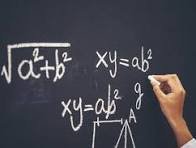
Algebra
Algebra is a branch of mathematics that uses letters, symbols, and variables to represent numbers and quantities. It helps in solving mathematical problems where some values are unknown. Algebra allows mathematicians to express relationships between numbers in a general form.
Instead of using only numbers, algebra introduces variables such as x, y, and z to represent unknown values. This makes it easier to create formulas and solve complex problems.
Important concepts in algebra include:
Variables – Symbols or letters used to represent unknown values in an equation.
Linear Equations – Equations that form straight lines when represented on a graph. They usually contain variables with a power of one.
Quadratic Equations – Equations that include variables raised to the power of two. These equations are commonly used in physics and engineering.
Polynomials – Mathematical expressions that consist of variables and coefficients combined using addition, subtraction, and multiplication.
Expressions and Formulas – Algebraic expressions and formulas help represent mathematical relationships between different quantities.
Algebra is widely used in fields such as engineering, economics, finance, computer programming, and scientific research because it helps in modeling real-world situations and solving complex problems.
Why Love Nature
Your customers just learned what services you offer. Tell them why they should work with you or your team, for example you could highlight your experience and positive client reviews.
The badges illustrate this. We also focus on key benefits they will get while using our services, namely quick turnaround times and dedicated support. You could also use them to show awards you won for your best work.